When is the best time to aerate your lawn in South Carolina? The answer depends on what grass is growing in your yard. Tall fescue and other cool-season grasses recover best from aeration in fall, while Bermuda, Zoysia, Centipede, and St. Augustine lawns are usually aerated in late spring or summer after they are actively growing.
That distinction matters in the Rock Hill area, where lawns can include different turf types and soil conditions. Aerating at the right time gives grass a better chance to recover from the small holes made in the soil. Here is how to choose a window for your lawn.
Quick answer: Aerate tall fescue in fall and warm-season grasses after spring green-up, commonly in late spring. Pick a mild day when the soil is moist enough to penetrate, but not saturated.
Best aeration timing depends on your grass
Tall fescue: aim for fall
Tall fescue is a cool-season grass, and Clemson Extension notes that it is popular in South Carolina’s mountain and upper Piedmont areas. For fescue, fall is generally the better time to core aerate because the lawn is past the hottest summer weather and can recover during favorable growing conditions. In the Rock Hill region, plan around the lawn’s condition and the season rather than a fixed date. Leave at least four weeks of suitable growing weather after aeration so the turf has time to recover.
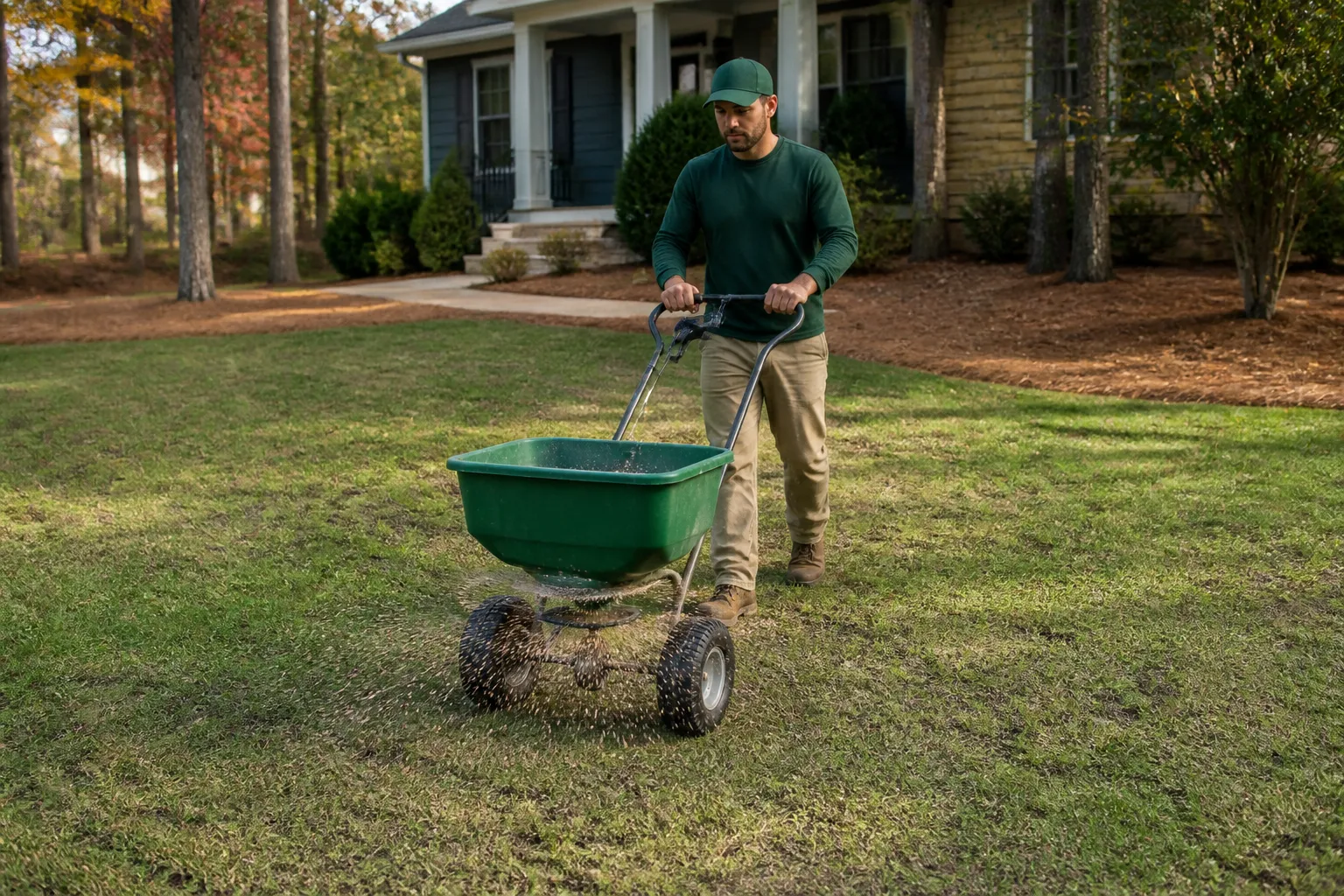
If you are also addressing thin or bare fescue, coordinate aeration with your fall renovation and overseeding plan. Aeration can help open compacted soil, but it does not replace choosing the right seed or providing proper follow-up care. See our lawn renovation services for help planning a broader lawn recovery project.
Bermuda, Zoysia, Centipede, and St. Augustine: wait for active growth
Warm-season grasses are best aerated in late spring or summer while they are actively growing. Wait until the lawn has fully greened up after winter dormancy. Clemson Extension identifies May, after full green-up, as a suitable time for warm-season lawn core aeration. The exact window shifts with the weather and the turf’s condition, so do not aerate a warm-season lawn while it is still dormant or just beginning to wake up.
Once the grass is growing strongly, it can begin filling in around the aeration holes. Avoid scheduling the work when the turf is drought-stressed or conditions are unusually harsh. If you are unsure which grass you have, identify it before choosing a date, because the right window for fescue is different from the right window for Bermuda or Zoysia.
How to tell if your lawn may need aeration
Aeration is most useful when soil compaction is limiting water movement and root growth. Watch for water that runs off or puddles instead of soaking in, hard soil that is difficult to penetrate, or thin areas in places where people or equipment regularly cross the lawn. Clay soil and heavy foot traffic can increase the chance of compaction. These signs can also have other causes, so consider drainage, shade, watering, and grass health before assuming aeration alone will solve the problem.
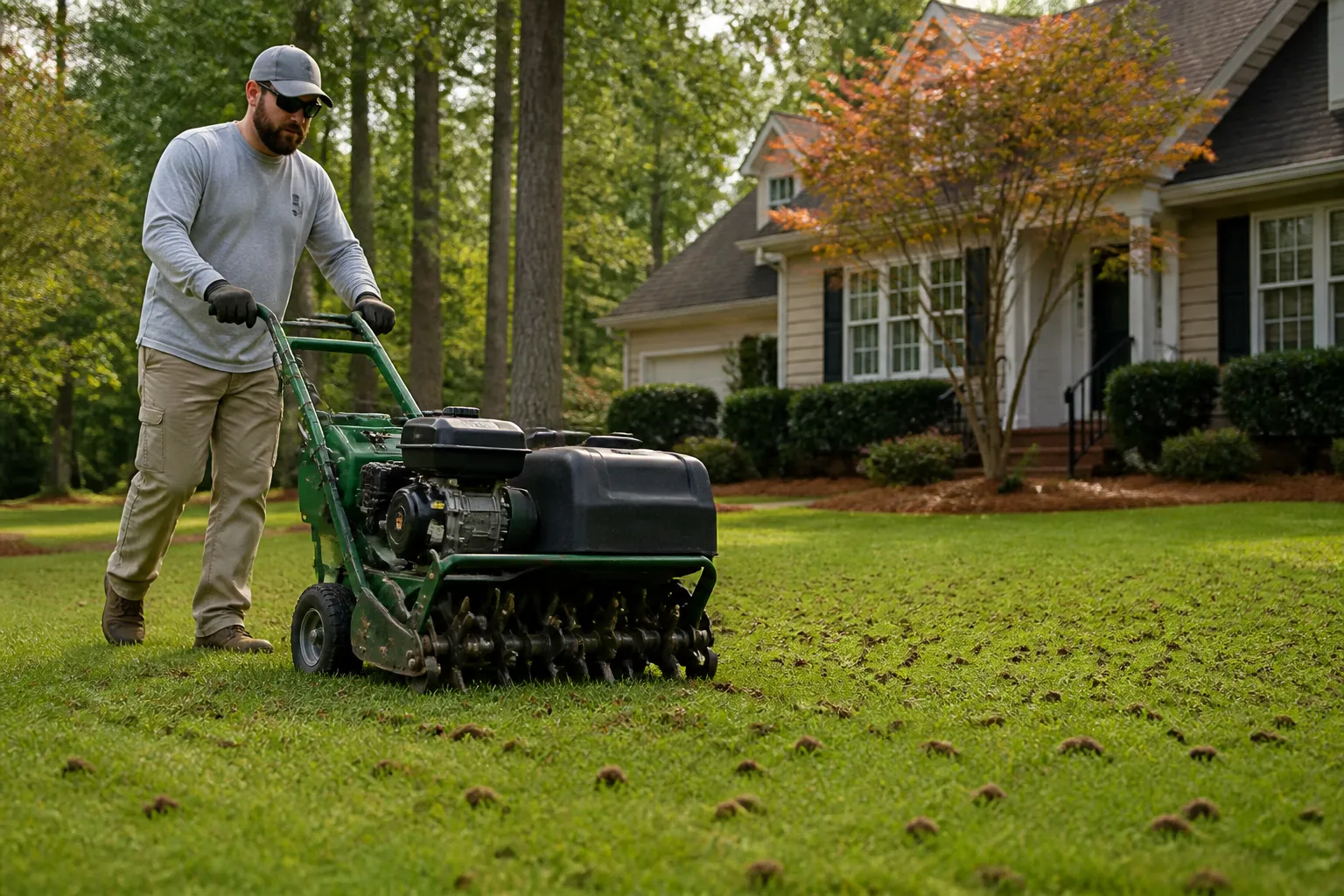
Core aeration removes small plugs of soil from the lawn. By opening channels through compacted areas, it can improve water infiltration and give roots more room to grow. Clemson Extension recommends core aeration over spike aeration. A spike pushes soil aside, while a core aerator removes plugs. Aeration is a targeted maintenance step, not a substitute for routine mowing, watering, or appropriate lawn treatments.
Choose the right day and prepare the lawn
For either grass type, choose a mild day and soil that is moderately moist. Soil that is too dry can be difficult for the machine to penetrate, while saturated ground may be messy and can make equipment work harder. If the lawn is dry, water it ahead of time and let the moisture move into the soil. If it is waterlogged after heavy rain, wait until it firms up.
- Confirm the grass type and choose the matching seasonal window.
- Move toys, hoses, and loose debris from the lawn.
- Mark sprinkler heads and other shallow features that could be struck by equipment.
- Tell the operator about any areas with buried lines, irrigation, or unusual drainage.
- For fescue, plan any overseeding or renovation as a coordinated project instead of treating aeration as a stand-alone fix.
A lawn that is actively growing and not under severe stress is generally better positioned to recover. Postpone the work if the soil is frozen, extremely dry, or saturated, or if the grass is dormant or struggling through heat and drought.
What to do after aeration
Core aeration leaves soil plugs on the surface. Clemson’s tall fescue maintenance calendar recommends breaking up the plugs. Once they have dried, they can be broken apart with a light pass of a mower or rake, as conditions allow. Continue normal care for the grass type and season. If overseeding fescue, follow a suitable seed and watering plan so the seed can establish.
Not every lawn needs aeration every year. Focus on areas with signs of compaction or repeated heavy use, and reassess how the lawn responds. If the same spots stay soggy or thin, look for an underlying drainage, grading, shade, or irrigation issue as well.
When should you schedule aeration in South Carolina?
Use the grass as your guide: fall for tall fescue, and late spring into summer for warm-season turf after it has fully greened and is actively growing. The day should be mild, and the soil should be moderately moist. Those conditions matter more than following a single calendar date across the entire state.
The Good News Lawncare serves Rock Hill, Fort Mill, Lake Wylie, and nearby communities. If you would like help planning seasonal lawn maintenance or deciding whether a larger renovation makes sense, contact us to discuss your property and the work you are considering.