When is the best time to overseed a lawn in South Carolina? It depends on whether you are thickening a permanent tall fescue lawn or adding temporary winter color to dormant Bermuda. Those are different projects with different timing, seed, and follow-up care.
For many homeowners in Rock Hill and the upper Piedmont, fall is the key season for tall fescue. For a Bermuda lawn that needs winter color, ryegrass is overseeded in fall, too, but at a different time and with extra care. Start by identifying the grass already in your yard.
Quick answer: Overseed tall fescue as temperatures cool, generally from mid-September into early October. For temporary ryegrass on Bermuda, seed about 30 days before the first frost, usually earlier in the Upstate than in the Midlands or on the coast. Seed warm-season grass for permanent establishment in late spring, not as fall winter-color overseeding.
For tall fescue, plan for early fall
Tall fescue is a cool-season grass that grows best in South Carolina during the cooler parts of the year. Clemson Extension recommends overseeding thin or bare tall fescue areas as the grass responds to cooler weather in September and early October. Its lawn-establishment guidance identifies mid-to-late September as a good general window for establishing cool-season grasses. Local weather, lawn condition, and site conditions can shift the best date, so treat those months as a guide rather than a single deadline.
Fall gives young fescue time to develop before it faces another South Carolina summer. Seeding too early can expose new plants to lingering heat, while seeding late leaves less time for roots and shoots to establish before cold weather. Use a tall fescue blend suited to the site, especially where shade or the upper Piedmont climate makes fescue a practical choice.
If the lawn is thin across a large area, overseeding may be one part of a broader recovery plan. Our lawn renovation service page explains how to discuss larger lawn improvement projects.
For winter color, ryegrass is mainly for Bermuda
Some South Carolina homeowners overseed dormant Bermuda with annual or perennial ryegrass to keep the lawn green in winter. This is temporary winter color, not a way to establish a permanent cool-season lawn. Clemson Extension says ryegrass overseeding is generally recommended only for Bermuda. The extra water, fertilizer, and competition can stress Centipede, Zoysia, and St. Augustine lawns as they resume growth in spring.
For ryegrass, Clemson recommends seeding about 30 days before the first frost, when days are warm enough for germination and nights are cooler. The usual timing is early October in the Upstate and late October in the Midlands and Coastal regions. Rock Hill homeowners should use the Upstate timing as a starting point and adjust for the season’s actual weather and their lawn’s condition.
Overseeding Bermuda has tradeoffs. Ryegrass competes with the permanent grass for light, water, and nutrients, and it can delay Bermuda’s spring transition if it is too thick or poorly managed. If you do not want a winter-green lawn, leave Bermuda dormant rather than adding a temporary grass. For more on seasonal turf care, see our guide to when to aerate a lawn in South Carolina.
Repairing warm-season grass is a different job
If your goal is to establish or repair a warm-season lawn such as Bermuda, Centipede, or Zoysia with its permanent grass, do not confuse that with overseeding Bermuda for winter color. Clemson Extension identifies May 1 through 14 as a suitable target for seeding warm-season grasses across South Carolina. Planting too early can mean soil temperatures are not yet favorable, while planting later can expose seedlings to summer heat and drying. Sod, plugs, and sprigs have their own timing and establishment needs, so match the method to the turf type and project.
For a larger replacement or installation, see our lawn installation page and discuss which approach fits your property.
Prepare the lawn before spreading seed
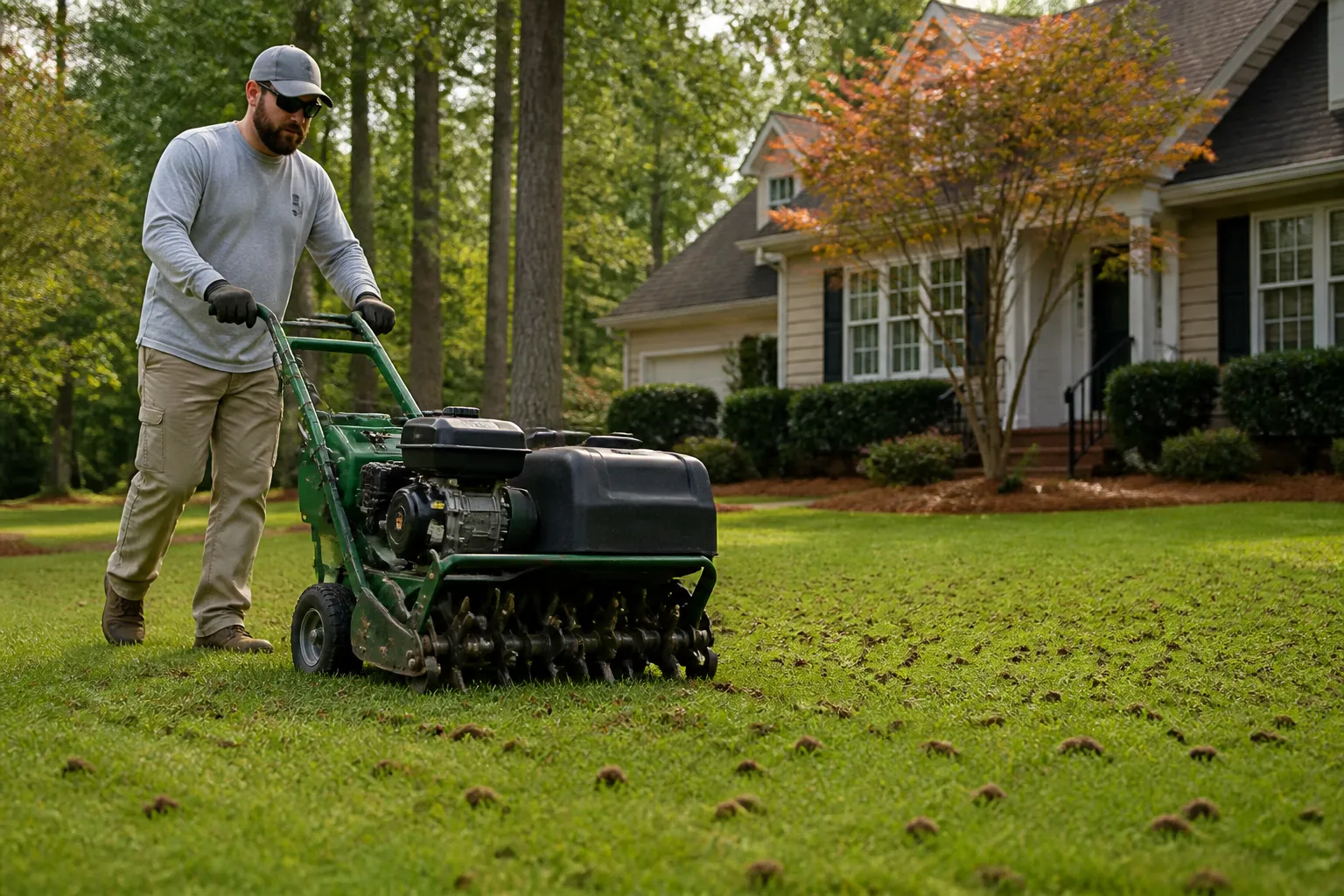
Good timing cannot make up for poor seed-to-soil contact. Before overseeding, identify the turf, remove leaves and debris, and address excessive thatch so seed can reach the soil. Follow the seed label for site preparation and application instructions. If you plan to core aerate, coordinate the timing with your seed type and goal. For ryegrass on Bermuda, Clemson Extension advises waiting about 30 days after core aeration before overseeding so the holes can heal and the winter turf can grow evenly.
Use a seed blend suited to the intended result. A permanent fescue overseed and a temporary ryegrass cover are not interchangeable. If weeds, drainage, shade, or compaction are the real cause of thin turf, address those conditions as part of the plan instead of expecting seed alone to fix them.
Care for new seed after overseeding
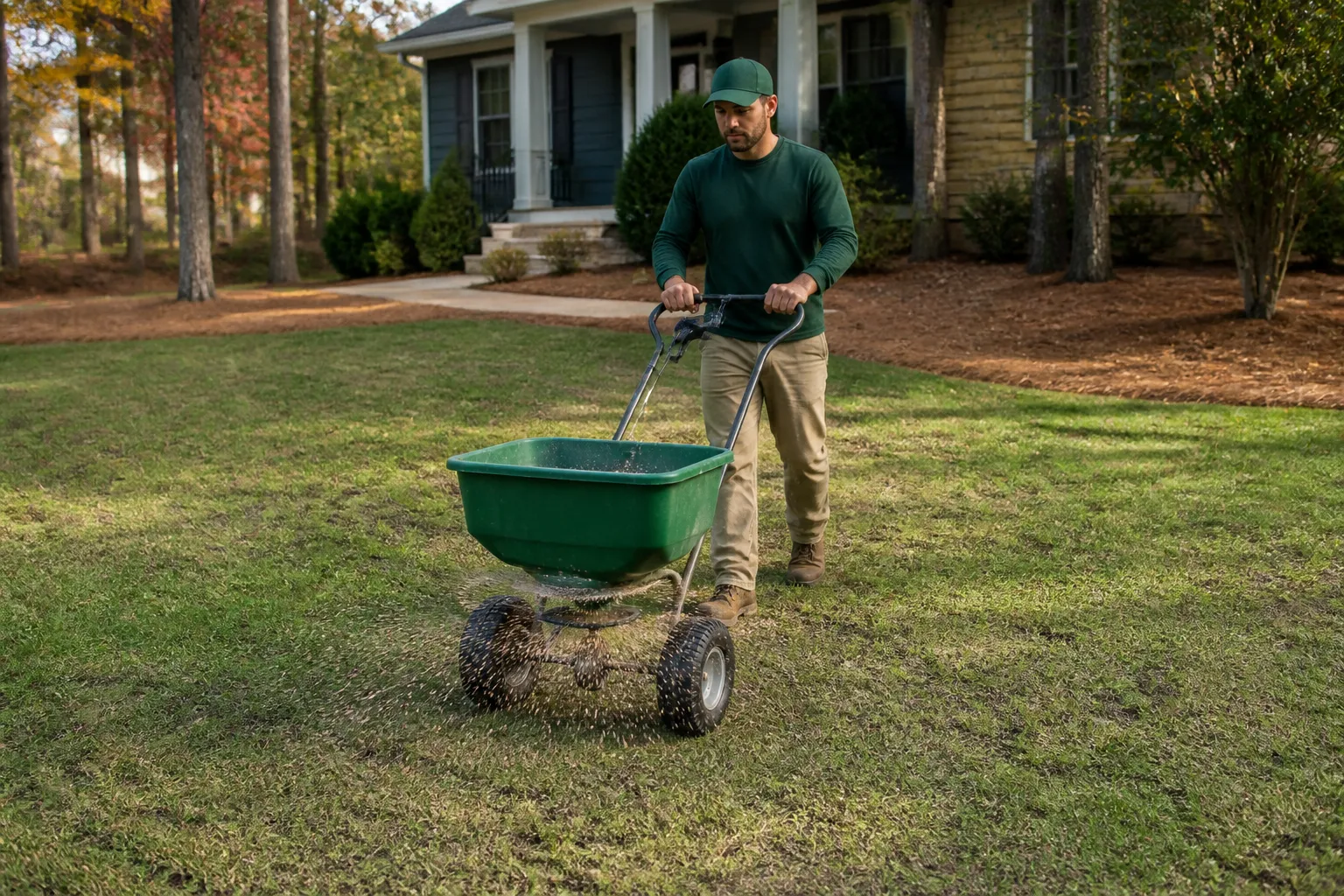
Keep the seedbed consistently moist while the seed germinates, using light, frequent watering as conditions require. Avoid washing seed away or keeping the ground saturated. Reduce foot traffic while seedlings establish, and follow the product instructions for mowing and any additional care. Clemson’s tall fescue calendar recommends keeping the seedbed moist with light, frequent sprinklings during germination.
For an established fescue lawn, the goal is to thicken the permanent turf. For ryegrass on Bermuda, the goal is temporary winter color and a managed transition back to Bermuda in spring. Knowing which result you want will help determine the seed, schedule, and aftercare.
Common overseeding mistakes to avoid
- Using the same timing for every grass type.
- Planting fescue too late in fall or warm-season seed before conditions are favorable.
- Adding ryegrass to Centipede, Zoysia, or St. Augustine without understanding the competition it can create.
- Spreading seed over thick thatch or debris without preparing the surface.
- Letting new seed dry out, or overwatering until seed washes away.
Need help planning a lawn renovation?
The Good News Lawncare serves Rock Hill, Fort Mill, Lake Wylie, and nearby communities. If you are unsure which grass is growing in your yard or whether overseeding makes sense, contact us to discuss the lawn’s condition and the options you are considering. Learn more about lawn maintenance or get in touch with The Good News Lawncare.
Clemson Extension resources
For additional South Carolina guidance, read Clemson Extension’s Tall Fescue Maintenance Calendar, Lawn Establishment, and Overseeding With Ryegrass fact sheets.